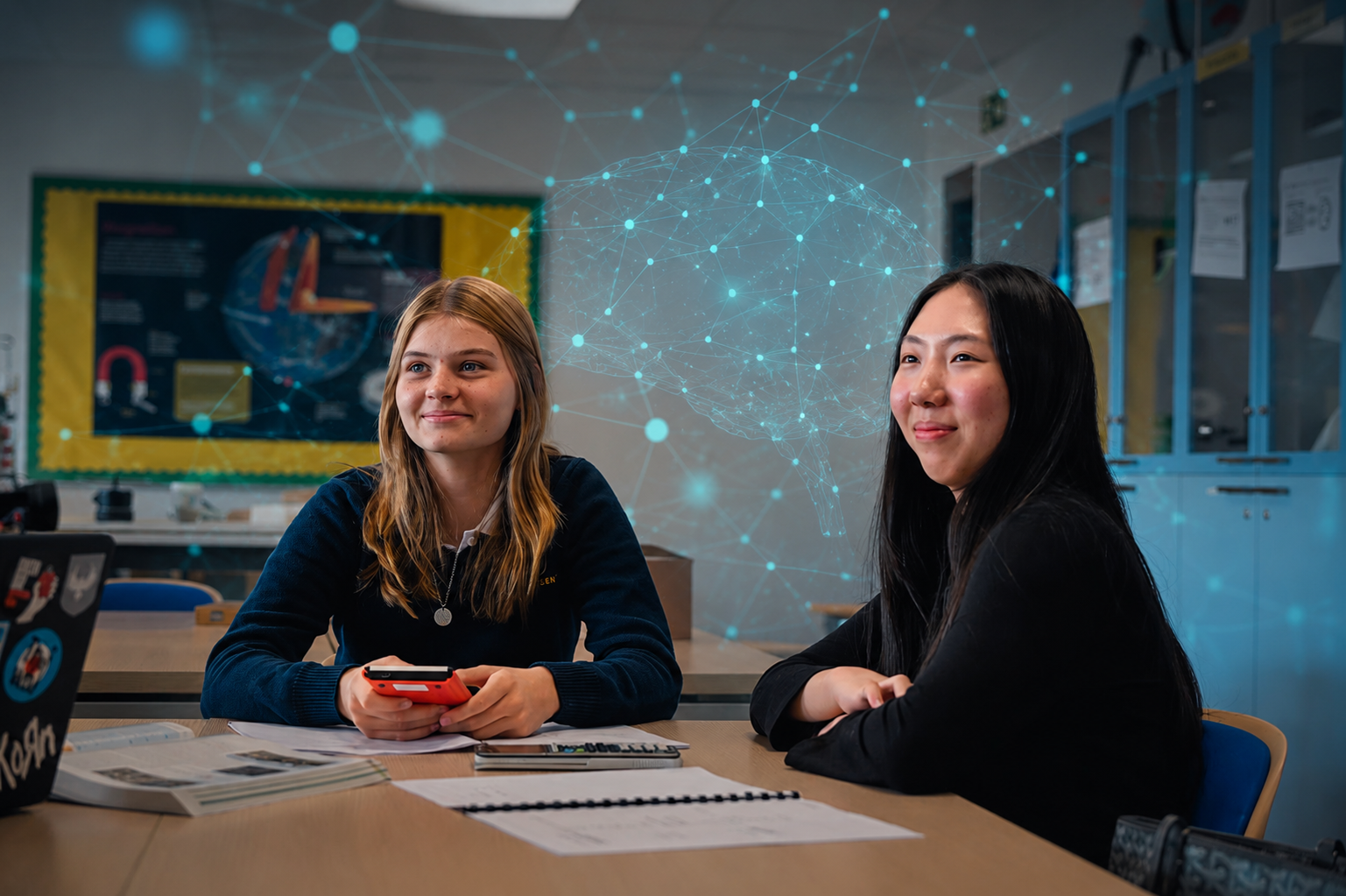
Artificial intelligence has moved faster than almost anyone predicted. Two years ago, most parents were only beginning to hear about it. Today, their children are using it — in school, outside school, and in ways that most educational institutions are still working out how to respond to.
For families choosing a school, or thinking about the education their child is currently receiving, AI raises questions that deserve honest answers. Not reassurance. Not alarm. Honest answers.
This is what we know, what it means for education, and how Le Régent is thinking about it.
What Has Actually Changed
The arrival of large language models — the technology behind tools like ChatGPT — has done something genuinely new. It has made a certain kind of intellectual output cheap and abundant. Text that is coherent, plausible and competently structured can now be produced instantly, at scale, by anyone with an internet connection.
That changes the value of some skills and raises the value of others.
The skills that AI performs well — summarising information, producing grammatically correct prose, generating plausible-sounding answers to factual questions — are skills that education has historically spent a great deal of time developing. That investment now needs to be rethought.
The skills that AI cannot replicate — genuine critical thinking, original judgment, ethical reasoning, the ability to ask the right question rather than answer the one given, the capacity to build trust with another human being — are the skills that will define the most valuable people in almost every field over the coming decades.
Education that continues as if nothing has changed is not preparing students for the world they will actually enter.
What This Means for Your Child
The anxiety many parents feel about AI and education is understandable, but it is often pointed in the wrong direction. The risk is not primarily that students will use AI to cheat on essays — though that is a real and immediate challenge for schools. The deeper risk is that education systems continue to optimise for the skills AI has made less valuable, while underinvesting in the ones that matter most.
A student who leaves school having been trained principally to recall information, reproduce arguments and produce correct-looking written answers is not well prepared for a world in which a machine can do all of those things faster and cheaper.
A student who leaves school able to think independently, argue with precision and originality, collaborate across difference, lead with integrity under uncertainty, and bring genuine human judgment to complex problems — that student is not competing with AI. They are doing something AI cannot do.
The question for families is not whether their child's school has a policy on ChatGPT. It is whether the school is building the capabilities that will matter in twenty years.
The Skills That Will Matter Most
Research across education, economics and cognitive science points consistently to the same cluster of human capabilities as most valuable and most durable in an AI-shaped world.
Critical thinking. The ability to evaluate evidence, identify flawed reasoning, distinguish between what is known and what is assumed, and arrive at conclusions that are genuinely defensible rather than merely plausible. This is not a subject — it is a disposition, built through practice across every discipline.
Original judgment. The capacity to form a considered view that is not simply an aggregation of existing opinions. AI is very good at producing consensus. It is not capable of genuine originality. Students who develop the habit of forming and defending their own positions are building something that remains distinctively human.
Communication and persuasion. The ability to make a complex argument clearly, to read a room, to adapt communication to context and audience, and to build genuine understanding between people. These capabilities are relational and embodied — they cannot be outsourced.
Ethical reasoning. As AI takes on more consequential decisions across medicine, law, finance and public life, the humans who understand how to reason carefully about ethics — who can identify what is at stake, whose interests are affected and what the right course of action is — will be disproportionately valuable.
Resilience and adaptability. The world that today's students will enter as adults will change faster than any previous generation has experienced. The ability to tolerate uncertainty, adapt to new circumstances and recover from setbacks is not a soft skill. It is a core capability for a productive life.
What Good Schools Are Doing
The schools responding well to AI are not the ones that have banned it. Prohibition does not prepare students for a world in which these tools are everywhere. It simply delays a reckoning that will come regardless.
The schools responding well are doing several things simultaneously.
They are teaching students to use AI tools intelligently — understanding what they are good for, what they distort, and how to verify and interrogate the outputs they produce. Digital literacy in 2026 includes AI literacy.
They are redesigning assessment to focus on the capabilities AI cannot replicate — oral examination, original research, extended projects that require genuine thinking over time, collaborative work that is observed and evaluated in real time.
They are investing in the human dimensions of education that become more valuable as AI becomes more capable — small classes, deep teacher-student relationships, discussion-based learning, and the kind of pastoral environment that builds character alongside academic capability.
And they are being honest with students and families about what is happening and why — rather than pretending that the educational landscape is not changing.
Le Régent's Position
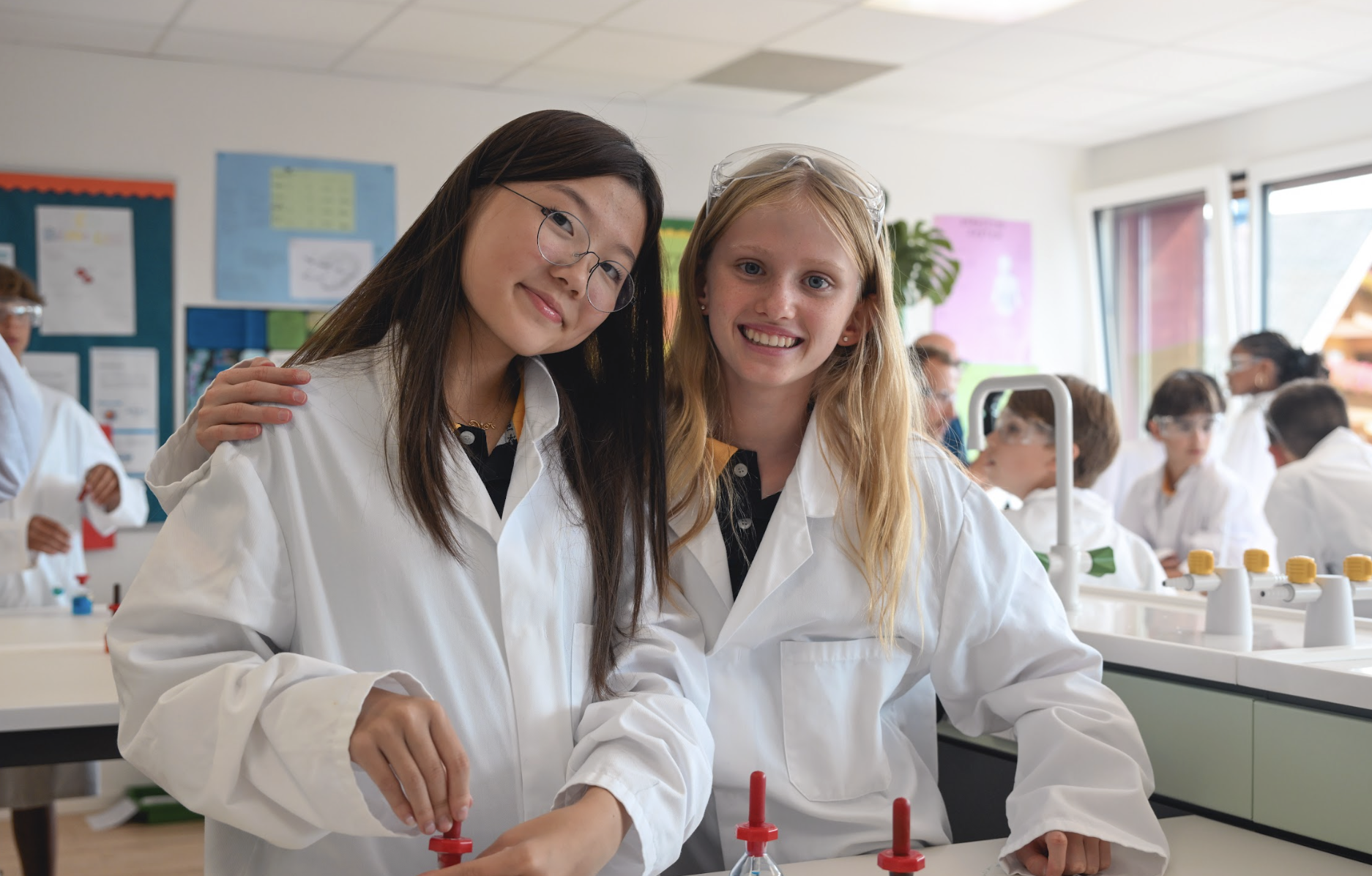
Le Régent's response to AI begins with something that has always been true of the school: small class sizes and genuine individual attention make it possible to teach in ways that develop real thinking rather than performance of thinking.
In a class of eight or ten students, a teacher knows immediately whether a student has genuinely understood something or is producing the appearance of understanding. Discussion cannot be faked. Original argument cannot be generated by a tool and passed off as a student's own without it becoming apparent quickly.
The school's emphasis on multilingual education, outdoor challenge, international community and independent living is not incidental to the AI question. These are precisely the dimensions of a student's development that AI cannot touch — the character, the resilience, the cultural intelligence and the human depth that distinguish a person who happens to use AI tools from a person who has been replaced by them.
Le Régent is also actively developing its curriculum and assessment approach to reflect the reality of the AI landscape — ensuring that what students are evaluated on is what will actually matter in the world they are preparing to enter.
What to Ask a School About AI
For families in the process of choosing a school, these are the questions worth raising:
How is the school teaching students to use AI tools responsibly and intelligently, rather than simply banning or ignoring them?
How has the school adapted its assessment approach to ensure it is evaluating genuine capability rather than AI-assisted output?
What is the school doing to develop the human skills — critical thinking, original judgment, communication, resilience — that will be most valuable as AI becomes more capable?
The answers will tell you a great deal about whether a school is thinking seriously about the world its students are being prepared for.
A Note for Parents Who Are Uncertain
It is worth acknowledging that many parents find this landscape genuinely confusing. AI is moving quickly, the implications are contested, and the advice from different quarters is contradictory.
The honest position is that nobody knows exactly what the world will look like in fifteen years. What we do know is that the humans who will thrive in it are the ones who can think clearly, act with integrity, build genuine relationships and bring something distinctively human to the problems they encounter.
Those capabilities are built in schools that take them seriously. And they are built over time — through the accumulation of small daily experiences of being known, being challenged, being supported, and being asked to bring the best of yourself to what you do.
That is what Le Régent is working to provide.


.png)